


What are Indoor LED displays?
Indoor LED displays are flat-panel displays that use individual light-emitting diodes (LEDs) as pixels to create images on a screen. The diodes (that's the "D" in LED) are electricity conductors that, when a voltage is run to them, light up. When varying voltage is applied to each individual LED, they shine at various levels of brightness, creating images. There are multiple types of LED display panel types with differences that make them better for different usages. These types include lightbar, dot matrix, 7-segment, 14-segment and 16-segment. If you want to know the specifications and prices of Indoor LED displays, please contact us!
Why Choose Us?
Leder company is specializing in the LED display R&D, sales, engineering, which is one of the most advanced professional manufacturers of LED big screen display systems in China. We specialize in producing 1080p Full Color Indoor Led Board, Digital Customized Advertising Led Signs, Indoor LED Advertising Screens, Indoor Full Color Advertising Led Display Screen, Full Color Indoor Hd Led Monitor, and other Indoor HD LED Display.
Prompt Response
Reply to your LED display inquiry within 24 working hours.
Customized Design
Offering customized design options for your specific requirements. OEM & ODM are welcomed.
Experienced Team
Dedicated staff with over 10 years of experience in the LED display field, our well-trained and professional engineers and staff are committed to providing exclusive and unique solutions for our customers.
Global Sales
Leder LED displays have been exported to the United States, Japan, South Korea, Australia, Southeast Asia, Russia, Europe, and other Countries and regions.


Advantage of Indoor LED Display
LED Displays Produce High-Quality Images:
LED display provides you with an unbeatable color range and definition. This way, you will enjoy the high-quality broadcast LED displays offer.
Without forgetting that it also allows you to include lighting effects to enhance the picture quality.
Needless to say, a full-color LED display lets you enjoy a display of more than 15 million colors. This explains why LED screens feature ultra-high contrast levels.
LED Displays Consume a Small Amount of Energy:
One of the major selling points of LED displays is that they consume less power compared to other traditional displays.
What you must know is that an LED display can consume up to 10 times less energy than an incandescent bulb.
For that reason, they are the best option if so, you want to save on your electricity costs.
They Have a Longer Life Expectancy:
Normally, LED displays can reach up to 100,000 hours which is equivalent to 10 years.
This is however if they are in the same working environment.
You also need to have it in mind that some factors might affect the lifespan of your LED displays. Power, weather, content featured on the display, and design top the list.
Even so, LED displays easily outshine the competition and save you on costs from constant replacements.
There Is No Size Limit to an LED Screen:
While there are difficulties in making media bigger, making media smaller is often easier.
When it comes to LED displays, you can use several LED panels together to achieve your functionality. Therefore, LED display size is never an issue.
LED Displays Are Safe and Secure for Users:
LED displays are often very safe and secure for any user. Not only are LED screens waterproof and dust proof but also can be viewed in direct sunlight. This allows you to use them in both indoor and outdoor settings.
They Are Easily Programmable:
With an LED display, you don't need to operate it at the exact location of their installation.
You can program it from anywhere you are in the world. But at the same time, you need to ensure that you have a reliable internet connection for this to succeed.
The advantage that this presents in comparison to traditional sources is that you save on time and costs.
The best bit is that most of them are designed to allow any user to program without having any technical knowledge.
LED Displays Have a Short Response Time:
You can swiftly switch between different modes or settings depending on your liking.
What I mean by this is: Let's take for example you decide to achieve full brightness in an indicator LED.
It will take less than a millisecond to switch to your desired brightness capacity.
You might have also noticed that LEDs used in communication gadgets have an even faster response time.
This saves you time when operating an LED display.
An LED Display Has Great Viewing Angles:
With LED displays, expect to have perfect viewing angles irrespective of your position.
This in turn eases the need to find a better position or angle to view the display from.
Type of Indoor LED Display Technologies

● Edge-Lit LED (ELED)
Just as the names suggest an LED display with edge-lit technology features LED lights placed at the periphery of the display pointing towards the center of the display. These LED strips are either placed only on the sides or below or all around the LCD screen. The way these LED technology works is simple; what happens is that the light from the LED strips at the edges of the device shines into a light guide, this light guide then directs the light into a diffuser, the diffuser finally spreads the light evenly and uniformly across the screen to produce a desired image with no bright spots.
This LED technology has been in existence for ages, and it is now found in most budget-friendly LED displays.
● Direct-Lit LED
Direct-lit LED is an upgrade of the ELED technology. With the direct-lit, the LEDs are placed behind an LCD screen to illuminate the screen. The LEDs are positioned horizontally in a grid pattern from end to end of the screen. This arrangement of LEDs ensures that light is shined evenly across the screen. However, it is worth noting that the light is further passed through a diffuser which also spreads the light uniformly across the screen.
Due to the numerous LEDs and uniform arrangement of LEDs used in this technology, they tend to produce brighter images and provide more contrast than ELED displays. And even though displays that feature this type of technology are affordable, we will like to highlight that they tend to be more expensive than ELED displays.
● Full-Array
The next type of LED technology used in displays is a full array. Full-array LEDs are another type of backlit LED-- just like direct-lit-- however, the difference for this is that more LEDs are used compared to the direct-lit technology, and these LEDs cover the entire back of the display, providing better brightness and color contrast. However, one feature that sets full arrays apart is that the LEDs used are grouped into various zones which can be controlled individually to provide a robust contrast control that automatically adjusts the light output of specific areas of the screen, creating deeper blacks and brighter highlights-- this is known as local dimming.
● RGB
RGB stands for Red-Green-Blue, and this type of LED is often used to produce aesthetic and colorful illuminations. If you are into gaming or decorations, you have probably seen an RGB LED.
The way this LED works is simple, each RGB LED has a red, green, and blue component attached to the LED. So, depending on the color to be displayed, the current flowing through either of the red, green, or blue components is varied, as a result, each color component is either made to be dimmer or brighter. For example, to produce a purple color, the current flowing through the red and blue components is heightened, while the current flowing through the green component is lessened, as a result, the purple color is achieved.
So, the ability to control the illuminance of either of the three color components of the RGB LED is the reason why this type of LED can produce various and almost all colors.
● Organic LED (OLED)
If you might have noticed, the first three technologies we addressed in this section consist of a display (LCD) and an LED, and what the LED does is produce light for the LCD. Well, OLEDs take a different path such that with OLEDs, the display itself produces its light when current passes through; therefore, there is no requirement for backlighting. Essentially, how this works is that the display such as a Glass TFT backplane has certain organic compounds such as Polyfluorene, or Triphenylamine built in them, and when current passes through, they emit light.
Due to the absence of a backlight, OLEDs tend to be thinner than the first three types displayed and highlighted in this section. Not only that, but OLEDs have an infinite contrast ratio and this is because the brightness of each pixel can be controlled independently. Besides that OLEDs are known to be more color accurate, and have a faster response time with an unlimited viewing angle than their predecessors.
● Quantum Dot LED (QLED)
QLED is a typical LCD-LED screen with quantum dots technology. So, previous LCD-LED displays consist of a blue LED backlight, this blue light is then filtered through a layer consisting of phosphorus gas, turning the blue light into white. This white light then passes through various RGB pixels to produce colored images on the screen. Well, the issue with this process was that the resulting image had the colors: red, white, and black being pale and affecting the overall image quality.
Well, to solve this problem, developers brought about quantum dots, and essentially, with a QLED, the phosphorus filter screen is replaced with red-and green quantum dots. These quantum dots do not act as filters but rather they emit their light, and when the blue light from the backlight LED passes through them, the mixture produces pure white light, which is then sent to the subpixels to produce images. Note a combination of red green and blue produces white, which is why it happens.
This process causes QLEDs to produce more vibrant colors with great contrast and less operating energy consumption.
● Mini-LED
The idea of a mini-LED is built off that of a QLED. Essentially, it features the same technology as a QLED, with the only difference being that the LEDs on the backlight are much smaller and numerous; hence the name. Due to the numerous LEDs, it can be further sectioned into more zones providing more control of the black levels and more contrast compared to a QLED.
● Micro-LED
The final type of LED on our list is the micro-LED and this technology is a variation and an upgrade of the OLED. Unlike OLED which uses organic materials to produce its light, micro-LEDs use inorganic materials such as Gallium Nitride to produce its light. Due to the use of inorganic materials, this type of display tends to produce brighter images with less.
Components of Indoor LED Display
1. LED Modules
LED module is the most important component. LED module consists of PCB (printed circuit board), LEDs, ICs and plastic protection cover. And the LED module price determines the price of the entire LED displays.
There will be indoor LED module and outdoor LED module. Indoor LED module is higher resolution and higer contrast ratio. Outdoor LED module is waterproof and higher brightness.
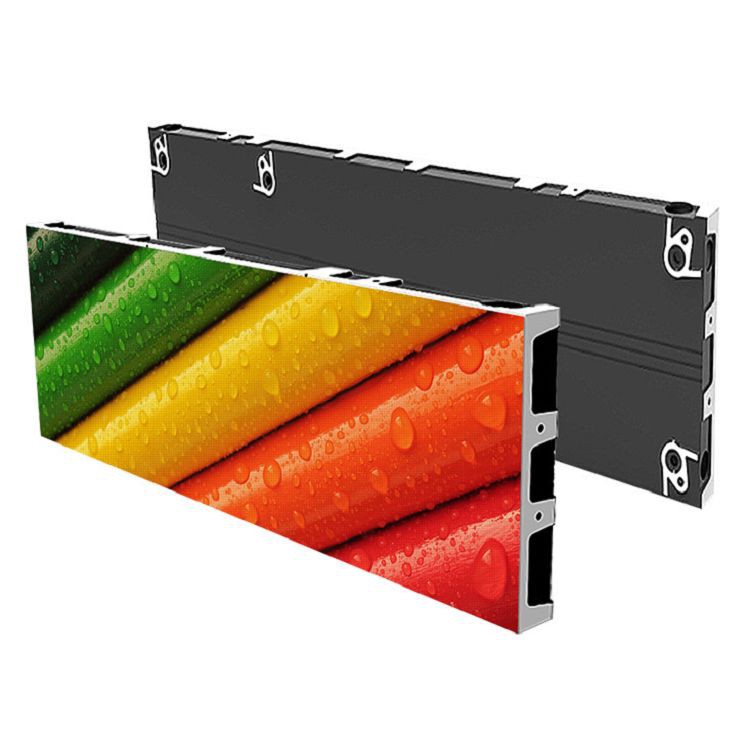
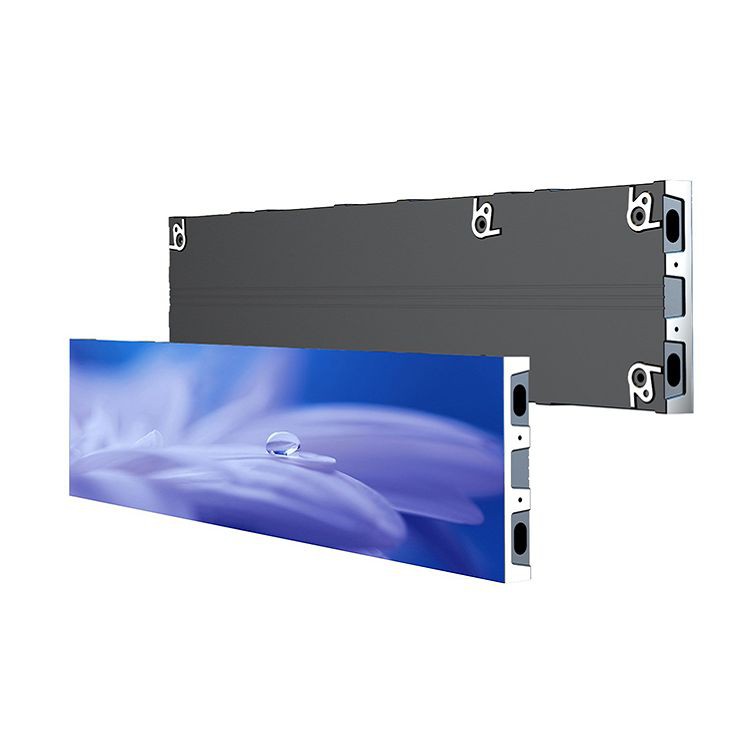
2. LED Cabinets (We also call assembled cabinets LED panels.)
The LED displays can be easily assembled and disassembled with cabinets. LED modules, power suppliers, receiving cards, cables and screws are assembled in cabinets for installation and protection. You can install cabinets on structure, then connect all the cable for cabinets, computer and power source. After that you can run the LED display directly, because we have set up the screen before we ship.
There will be indoor cabinets, outdoor cabinets and die casting cabinet for events. Outdoor cabinet is waterproof. Indoor cabinet is light and slim. Die casting cabinet can be assembled and disassembled easily for different events.
3. Power Suppliers
LED Modules require stable DC voltage and DC current. Power suppliers can transfer AC to DC and supply stable output power. We will supply power suppliers based on AC voltage in your country.
4. Control Hardware
LED displays don't work like TVs and more like computer displays or monitors. It requires video signal input. The control system will process the input video signal, and send to the LED display. Then the LED screen will display the video signals.
There are will be asynchronous control hardware and synchronous control hardware. Synchronous control hardware is mainly used for indoor fixed LED display, indoor and outdoor events backdrop LED screens. Asynchronous control hardware is mainly used for outdoor fixed LED screens.
5. Computer, Laptop and Cell Phone
You can control the control hardware with computer, laptop and cell phone. Cell phone is mainly used for outdoor LED displays.
6. Cables
There will be 2 kinds of cables, data cables and power cables.
Cables are inside cabinets. Data cables connect modules and receiving card. And power cables connect modules and power suppliers.
Cables are outside cabinets. Data cable and power cables connnect cabinets. RJ45 Internet cables which connect control card and receiveing cards. Three core power cables which connect power source and cabinets. Each cabinet has data and power connectors for input and output.
7. Fans
Fans are used for outdoor LED displays. Fans are used for cooling the whole LED display and lowing the panels temperature.
Screws and Braces.
Screws and braces are used for installing LED panels on structures.
How to maintain Indoor LED Display?
Regular cleaning of LED displays is key to keeping their appearance clean and working properly. Use a soft dust-free cloth to gently wipe the surface of the display screen. Avoid using cleaners containing alcohol, solvents or corrosive ingredients to prevent damage to the LED or coating.
LED displays are usually not water resistant, so avoid getting moisture inside the display. When cleaning, make sure the dust-free cloth is slightly wet, not soaked, to avoid water droplets entering the display.
LED display is sensitive to ambient temperature. Ensure that the temperature around the display screen is appropriate and avoid too high or too low temperatures. Too high a temperature may cause the LED to overheat and damage, while too low a temperature may degrade the display.
Providing stable power supply is the key to the normal operation of LED display. Use reliable power supply and stable power line to avoid power supply fluctuations and voltage instability. Check the power lines and plugs regularly to make sure they are properly connected.
Avoid collision and vibration of the display screen, so as not to damage the LED and internal electronic components. When installing and moving the display, perform this operation carefully to ensure that the display is securely fixed.
Check the working status and connection of LED display regularly. Watch for uneven or dim leds and loose connections. If any problem is found, repair or replace the faulty component in time.
Displaying the same image at rest for long periods of time can lead to the "burn screen" effect, in which certain pixels on the display display the same pattern for long periods of time. Try to avoid long periods of static display, you can reduce the problem by changing the display content regularly or using the screensaver feature.
Adjust the brightness and contrast of the LED display properly according to the ambient brightness and demand. Too high a brightness may cause glare, while too low a brightness may cause the display to be unclear.
In the case of thunderstorms, protect the LED display against lightning. Use proper lightning protection devices, such as lightning arresters and lightning nets, to protect the display panel from lightning damage.
Pixel Pitch
Pixel pitch is the distance between the center of one LED pixel and the center of an adjacent pixel, measured in millimeters. A smaller pixel pitch indicates a higher number of pixels, resulting in higher resolution images. When selecting an indoor LED display, consider the viewing distance to determine the optimal pixel pitch. A larger pixel pitch may be suitable for a large screen viewed at a distance, while a smaller pixel pitch is ideal for close-up viewing.
Brightness
Brightness is crucial for outdoor installations but should also be considered for indoor LED displays. Evaluate the ambient lighting conditions in the environment to ensure optimum visibility.
Viewing Distance
Since indoor displays are often viewed from shorter distances than outdoor displays, it's important to choose a display with an appropriate viewing distance range. This will ensure that viewers can see the content clearly without any distortion or blurring.
Color Reproduction
Indoor LED displays should be able to reproduce colors accurately and vividly. This is especially important for displays used in retail settings where color accuracy is critical.
Refresh Rate
A high refresh rate is important for indoor LED displays that will be displaying fast-moving content like sports games or concerts. A higher refresh rate ensures smooth motion and eliminates flickering.
Size
Selecting the right screen size is crucial in ensuring your indoor LED display delivers optimal performance. The size of the display depends on various factors, including the available space, the viewing distance, and the content you plan to display. For instance, if your audience will be located at a distance from the screen, you might need to select a larger display size to ensure visibility and clarity.
Durability and Maintenance
Finally, choosing an indoor LED display that is durable and requires minimal maintenance is important to ensure you get the most out of your investment. Consider factors such as the materials used to make the display, its operating temperature range, and whether it comes with built-in features such as dustproofing and waterproofing. These considerations will help you select an LED display that is reliable and easy to maintain.
Stage Events
LED screens provide a unique atmosphere to stage events. They can turn the event into a fun and thrilling spectacle. We use display screens in many different applications, including stage events. They can display content and provide a better experience for the audience.
These display screens have become quite popular now. It is because of the advancements in LED technology. This progress has made them more efficient and cost-effective. And the use of screens for stage events has become a regular thing. They have become a source of visual pleasure.
The primary goal of any event is to amuse or entertain the audience. It does not fulfill its purpose if it does not enlighten the atmosphere. And what better way do we have than to achieve this goal with display screens? I think that with these screens, every person becomes a part of the event. They connect the audience with the performers on the stage.
Shops and Malls
If there is one fact that we all approve of LED screens, it is this. They are a great way to display information in a shop. They are more efficient and effective than traditional displays. And we can use them for this purpose in shops and malls also.
We have been using LED video screens in retail stores for years now. We have done so through digital signage, video walls, and posters.
Moreover, we can use LED screens in directories and entertainment stores. These screens can create a mesmerizing effect on people. They can attract pedestrians to the shopping malls. They will inspire and make them browse your products. Moreover, you can advertise the objects on these screens.
I am confident that display screens have the power to captivate the mind. As a result, pedestrians are more likely to come to your shop or mall. It is an investment worth investing in for your business.
Meeting Rooms
It is hard to deny that almost all modern meeting rooms and offices have LED screens. It is because I think they are an excellent tool for communication. First, you can use them to let the audience know what the speaker is saying. Then, you can start a video call without wires or any equipment.
People use these screens to display information and data in meetings. You can show presentations, videos, and other content.
There are many uses for a display screen in meeting rooms and offices. One benefit is sharing presentations with those who are remote. It requires some transmission infrastructure such as WIFI. You can use it to enhance a conference call by having remote participants that connect them all.
Cinemas
In general, cinemas have been replacing traditional film projection with LED screens. The primary purpose of screens in cinema is to display movies or films. But with the world progressing, there are improvements in the display and cinema.
You may have heard about the 2D or 3D visuals or stuff like that. There are more modern cinemas nowadays. This advancement is due to innovations in LED screens. It has enabled the cinemas to give a visual experience they lacked previously. I can say LED screens will go into all cinemas shortly.
Airports and Stations
We have applied LED screens in airports and stations for a long time. But, they have rapidly increased over the past few years. It is because they are more efficient than traditional methods. They are also more environmentally friendly than conventional methods of providing information.
We can use them to provide important information in airports and stations. This information can be about the flight or train schedule, weather, etc.
These display screens are a great way of communicating with all travelers. For example, keeping discipline with so many people at airports is challenging. With LED screens, everyone can see which flight is taking off and which is landing.
Casinos and Entertainment Places
You would often see LED screens in bars, clubs, and nightclubs. I think any such entertainment place is incomplete without a display screen. These screens build an atmosphere that is necessary for these places. They are essential for a joyful and thrilling experience.
LED screens give us the ability to control brightness and quick refresh rates. There are types of screens especially built for such places.
You may see many round LED screens in casinos to show the jackpot. We adopt flexible LED screens to complete such projects.
Control Rooms and Command Centers
LED screens have also invaded the command centers and control rooms. A small screen that can show all the information is an excellent gadget. In addition, the display screens are easy to carry around and install anywhere.
Control rooms and command centers are present for emergencies and disasters. We all know it is better to have screens to cope with these things. The application of LED screens will be intelligent, digital, and network related.
Restaurants and Hotels
LED screens are becoming more and more popular in hotels and restaurants. You can use them to provide a better experience for the guests. They can provide an interactive experience to the guests. They can offer an aesthetic look and entertain the people.
You can use them to show information about the hotel or restaurant. This information can include their location, hours of operation, or special offers. Display screens can also hint about the food served at a restaurant or hotel. It helps customers decide what they want to eat or drink before they even get there. And you can raise people's appetite by showing the food on the screen.
Churches
LED screen is becoming a standard item in churches and other religious buildings. They use it for animations, provide biblical lessons, and much more. It is a great tool to help people connect with the bible and the church's teachings.
They keep people engaged by providing context to what is going on in the sermon or service. They also provide visuals that can help make complex concepts easier to understand.
LED screens allow church leaders to offer a more engaging message. Besides, they create a memorable experience with lights, colors, and prayer scenes.
Rooftops and Streets
Rooftops are common means of outdoor advertising. For example, you can see advertising LED screens on the city's rooftops. And there is no doubt that it is an effective way of advertising.
The large LED digital billboards on the rooftops do make a visual impact. Every person walking around will take a look at the screen. Moreover, they can be visible to a large number of people. Thus, these screens have broad public coverage and can increase sales revenues.
When we talk about LED screens on the street, you can see them with pole installation mostly. Also, there are lamp pole LED screens. Their function is to popularize the city culture mostly.
Vehicles
Installation of LED screens on vehicles is widespread these days. It is the best carrier of advertisement. Such independent screens are present on vehicles of different types.
This type of application of LED screen has many advantages. One of the advantages includes a mobile advertisement. You can quickly increase your viewers instead of fixing it at a place. You can move and play content through vehicle loading. Your customer ratio automatically increases when more people have access to it. Its mobile feature makes it appear at any time and place.
Trade Shows
In this aspect, LED displays play a significant role in increasing your exposure rate. You can attract more audience and boost your business profile. Your business will flourish via this application of display screens.
There are many methods for the installation of trade show LED screens. You can mount them on the wall, hang them on the ceiling or stand them on the floor. Different forms of installation help you to advertise creatively. They are flexible and allow you to attract a mass audience.
Schools
In the end, display screens also have applications in the educational sector. You can use LED screens in classrooms as a teaching tool. They are effective in teaching students about different topics and also reducing distractions. They benefit students because they can focus on what the teacher is saying. They are a great way to have interactive learning in the classroom.
Our Factory


Ultimate Guide
Q: Is LED screen better than projector?
Q: What is the difference between indoor and outdoor LED displays?
Q: What happens if you use indoor LED lights outside?
Q: What are the advantages of LED over projector?
Q: What is LED screen technology?
Q: Why use LED screen?
Q: Is LED screen sustainable?
Q: Are LED screens safe for eyes?
Q: Are LED screens water resistant?
Q: What causes LED screen damage?
Q: Do LED screens contain mercury?
Q: Is LED screen a glass?
Q: Do LED screens give off heat?
As one of the most professional indoor led display manufacturers in China, we're featured by good service and competitive price. Please rest assured to buy high quality indoor led display made in China here from our factory. Contact us for more details.
led monitor cheapest price, thin led display, dot matrix led display