


What is Indoor HD LED Display?
HD: HD LED displays typically refer to those screens with 720 x 1280 pixels, equivalent to almost one million pixels per Screen. This type of LED Screen is a good choice for you if you are looking for a cheaper option. High-definition LEDs are a specific kind of light-emitting diode LED used in HDTVs and other displays. High-definition LEDs are a relatively recent innovation that has several benefits over older technologies like LCD and plasma screens.
HD LEDs are more efficient than LCD and plasma screens, have a more excellent contrast ratio and can display a broader color gamut. HD LEDs are also more convenient for usage in portable devices like laptops and smartphones since they are smaller and lighter than conventional LCD and plasma screens. If you want to know the specifications and prices of Indoor HD LED Display, please contact us!
Why Choose Us?
Leder company is specializing in the LED display R&D, sales, engineering, which is one of the most advanced professional manufacturers of LED big screen display systems in China. We specialize in producing 1080p Full Color Indoor Led Board, Digital Customized Advertising Led Signs, Indoor LED Advertising Screens, Indoor Full Color Advertising Led Display Screen, Full Color Indoor Hd Led Monitor, and other Indoor HD LED Display.
Prompt Response
Reply to your LED display inquiry within 24 working hours.
Customized Design
Offering customized design options for your specific requirements. OEM & ODM are welcomed.
Experienced Team
Dedicated staff with over 10 years of experience in the LED display field, our well-trained and professional engineers and staff are committed to providing exclusive and unique solutions for our customers.
Global Sales
Leder LED displays have been exported to the United States, Japan, South Korea, Australia, Southeast Asia, Russia, Europe, and other Countries and regions.


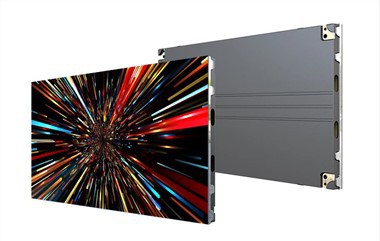


Benefits of Using an HD LED Display
Light-emitting diodes (LEDs) are used to create a picture on an HD LED display, a high-definition display.
There are several benefits to using an HD LED display instead of a regular LCD screen.
As compared to standard definition (SD) LED screens, high definition (HD) LED screens provide a more precise and detailed picture.
Energy costs may be reduced significantly when using HD LED screens since they consume less power than LCDs.
When compared to LCD screens, HD LED displays are more resilient and long-lasting.
In most cases, HD LED screens are far more space-efficient than LCD screens since they are thinner.
You won't miss a single second of your favorite program or movie thanks to the HD LED display's generally quicker reaction time than LCD screens.
Sizes of high-definition LED screens may be customized to suit individual preferences.
Because of its many advantages over standard LCD screens, high-definition LED displays should be your first option for any new display.
An HD LED display's picture can be read from practically any angle in the room, making it superior to LCD panels.
Advantage of Indoor HD LED Display

The Attention-grabbing Power of LED Screen
The biggest advantage of using an LED screen in an event is its ability to capture attention. LED screen utilizes LED display technology that helps to provide a brighter screen, better contrast ratio and high dynamic range. When it is installed at the event venue, visitors and attendees are more likely to pay more attention to the screen content due to its dynamic display and high screen readability.
Portable Design
When it comes to rentals, LED screens are portable. Thanks to its modular characteristic, multiple smaller LED screen panels or cabinets can be transported, removed or assembled easily. Since the LED screen is not installed in a fixed place, it can be relocated to another event venue quickly if needed.


Affordability and Reliability
Not every event organizer can afford to own an LED screen. Owning an LED screen does not only create financial pressure. It also burdens the organizer with challenges such as staff training, transportation, installation, operation, and maintenance. Trained personnel is needed to operate and monitor the LED screen throughout an event. All of these challenges can create bad impacts on both the event budget and preparation.
When an event organizer chooses to rent an LED screen from a rental service provider, it can free its hands from all kinds of tedious tasks that are related to the management of the LED screen. The service provider can provide a one-stop total solution where almost every aspect is covered, from installation to on-site support throughout the event.
The rental service helps to ensure a smooth-running event. The event organizer should never be bothered by any technical issue that might arise due to a lack of expertise in managing the LED screen. It should concentrate on other more important aspects that can help to run a successful event.
Customization
Unlike large-format display (LFD) that has only one single screen with a fixed screen size, the screen size of an LED screen can be customized to meet the event requirements. Different events or applications need different screen sizes. A large LED screen for a stage event is not suitable for applications such as exhibition booths and press conferences.
When the event organizer rents an LED screen from the service provider, the provider can help to create and install the LED screen in any form, shape, and screen size. This can provide endless creative opportunities where the event organizer can go wild to make the event the most effective ever.

Application of Indoor HD LED Display
Indoor LED display can be used in the sales gallery. Sales gallery is usually where a company promotes and sells their products. So, this is when an indoor LED display comes in, to exhibit the product information, to show the introductory video and it also acts as the backdrop of the sales event.
Some may wonder, why should it be an indoor LED screen? The reason is none other than the features and the benefits it offers. Applying an indoor LED display at the sales gallery will increase the engagement from potential buyers. In a sales gallery, a video will be played to show the overall product and with the indoor LED screen, it offers high brightness and rich colors. Indeed, the sales gallery is one of the best applications for indoor LED screen. The best pixel pitch size for sales gallery is P2.5
Here is another best application of an indoor LED display. As the technology evolves, hotels should take an initiative approach to be more innovative. Visitors visit hotel ballrooms for several reasons, for instance, they go to a hotel ballroom for an event, let it be a business event, wedding ceremony or a family event. When they are choosing a hotel ballroom for their events, many choices will cross their minds. So, it is safe to say that a hotel ballroom that can provide the best solution will most likely be chosen. An LED display screen in a hotel ballroom will be a bonus point. The suitable pixel pitch sizes to choose for hotel ballroom are P2.5, P.30, P4.0, P5.0.
An LED display in a hotel ballroom can act as the stage backdrop or to display dynamic videos and images. Videos and images displayed on the Indoor LED screen will look nice. As known, hotel ballroom is often used for wedding ceremonies and it would be wonderful to apply indoor LED screen to display the bride and the groom or their video. It will be very remarkable!
Indoor LED displays can also be applied in broadcast and TV stations. The application here is to use as the background. Background of any TV show is very crucial as viewers' attention will be focused there. Indoor LED display allows the background to be changed in real time for decorative purposes or for information sharing. The live show will not seem boring with the LED Indoor Display applied. If there is no information to be displayed, interesting and eye-catching decorations can be put up on the screen. Viewers will stay engaged all along.
Here is the answer to brush off the curiosity. Indoor LED screen is used for retail advertising and indoor advertising. Indoor LED Screen can be used as a way to reduce the printing works. Retail industry uses many printings for the promotions, and it is frequent. With indoor LED screen, no printings have to be done. Everything will be done digitally. Promotions can always be updated within a few clicks, no printing, no hassle. Everything is at the fingertips. Not just that, quality images displayed on the Indoor LED Screen is guaranteed. P2.5, P3.0 and P4.0 will be among the suitable pixel pitch sizes for retail advertising and indoor advertising.
How to Maintain Indoor HD LED Display Screens?

● Maintain the Humidity of the LED Display Screen Usage Environment
The interior of an LED display screen is composed of boards and components, which have high humidity requirements. Do not allow anything with moisture properties to enter your LED display screen, as this may cause corrosion and short circuits of internal components, leading to damage to the LED display screen.
● Require Stable Power Supply and Good Grounding Protection
Do not use the display in harsh natural conditions, especially during strong lightning weather.
● Avoid Prolonged Display of All White, All Red, All Green, or All Blue Images
Extended display of all white, all red, all green, or all blue images can result in excessive heating of the power cord, leading to damage to the LED lights and affecting the lifespan of the display screen.
● Recommend a Daily Rest Time of More Than 2 Hours for the LED Display Screen
During the rainy season, use the LED screen at least once a week to prevent internal components from getting damp, which may cause a short circuit when turned on again.


● Follow the Correct Switching Sequence for The LED Display Screen
First, turn on the control computer to ensure its normal operation, and then turn on the large LED display screen. Turn off the LED display screen first, and then turn off the computer.
● Perform Regular Cleaning and Maintenance
After using the LED display screen for a period, clean the screen in a timely manner. When cleaning, gently wipe the surface with a towel and alcohol, avoiding the use of a damp cloth directly.
● Avoid Potential Contact With Sharp Objects
The surface of an LED display screen is fragile, consisting of light beads. To prevent damage, choose passive or active protection, and keep items that may cause harm away from the screen.
● Regularly Check the LED Display Screen for Normal Operation
After installing the LED display screen for an extended period, frequently check the circuit for damage. If any damage is found, repair or replace it promptly. Non-professionals should not touch the internal circuit to avoid electric shock or circuit damage. If problems arise, promptly notify professional technical personnel for appropriate solutions.

How to Choose Indoor HD LED Display Screens?
Pixel Pitch: Measured in millimeters, Pixel pitch is the distance between the centre of an LED pixel and the centre of an adjacent pixel. A screen with a smaller pixel pitch has more pixels overall and provide higher resolution images than a screen with a larger pixel pitch. In general, a large screen that will be viewed from afar can have a relatively high pixel pitch, but a screen that will be viewed from close up should have a small pixel pitch.
Image Quality: Look for sharp images and a solution that provides a factory colour-calibration.
Brightness: Although more of a concern for outdoor installations, brightness should still be considered for indoor video walls. Consider the ambient lighting conditions of an interior environment to ensure that the video wall will have sufficient brightness to provide excellent viewability.
Contrast: A high-efficiency LED chip will ensure deep contract and black mask will boost the ratio.
Power Consumption: With the proper content and brightness settings, LED panels can be more energy efficient than LCD panels, saving money and the environment. Compare power consumption specs to determine the differences between models.
Heat Dissipation: Because LED emit heat as well as light, heat dissipation can be a concern for LED panels. Determine how each solution manages heat dissipation and what requirements are needed for your application.
Build Quality: Indoor video walls should be robust enough to hold up to installation and exposure to environmental conditions and minor bumps. Look for strong, lightweight panels with alignment features enabling precise placement. It's also very important to use mounting structures specifically designed for each panel design and to ensure the display provider supplies the structure with the display.
Turnkey Solution: For many customers, choosing a video wall installation that is a complete, end-to-end solution that includes hardware and services will be an ideal fit. Keep in mind, for easier installation and lower-cost maintenance, make sure video wall panels have front and rear access.
Cost: Pixel pitch is the primary contributor to a higher cost in an LED display, so it's important to work with your solution provider to ensure that the installation's pixel pitch matches budget, image quality expectations and content type.
Long Life: LED panels have very lengthy longevity ratings. For example, models rated at 80,000 hours of use will provide more than 13 years of service. When choosing the best video wall panel, ensure that the display solution can be colour calibrated. You may have seen LED displays with square sections that are brighter or darker than other portions of the display. This is usually due to repairs using new LED panels to replace older panels. Having the ability to calibrate the display will prove to be essential in the later years of the LED's lifespan. That's because calibration enables the colours and brightness of each pixel to be closely matched to the others in the entire display, eliminating those darker and lighter square section. Ultimately, calibration will make the video wall look like new and enable your content to shine.
Prepare the LED Screen
Before you can get down to the cleaning part, you need to prepare your LED screen in order to reduce the risk of liquids penetrating the surface and causing internal damage. Keep in mind that modern screens might technically include higher end features than the old school CRT screens from your childhood, but that doesn't necessarily mean they're more durable. In fact, modern LED screens are actually a lot more fragile and easily susceptible to damage if they're not cared for properly. To prepare the screen for cleaning, make sure you shut down the system entirely, disconnect it from its power source, and then let it cool down for a few minutes. This will reduce the risk of electrocution and it'll make it easier to clean the screen without resulting in annoying and unattractive streaks.
Never Press Down on a LED Screen
Occasionally, you'll have to contend with a tough spot, streak, or fingerprint marking that takes a little extra effort to clean. If this happens, don't panic and definitely don't press down harder with a cloth or try to scrape it off with your fingernails or any other tool as this can cause severe damage to the top layer or anti-gloss coating. The best thing to do is use a non-abrasive cleaning solution such as isopropyl alcohol that's diluted with either pure or distilled water. Spray the solution onto a microfiber cloth and gently wipe down the area in either an up and down or side to side motion. Applying too much pressure to even the most rugged touchscreen can compromise its limited durability.
Types of Cleaning Cloths to Use
The most recommended one is microfiber cloth for a multitude of reasons. First, microfiber is a state-of-the-art technological development that's a thin and soft, yet strong enough material to thoroughly clean your electronic devices without risking damaging them in any way. Most of the time, computer and flatscreen TV manufacturers provide microfiber cloths with their products along with a specific set of maintenance and cleaning instructions. Microfiber cloths are immune to collecting or spreading lint across your screen, and because of the intricate way in which the minuscule fibers are intertwined these cloths are able to trap larger quantities of dirt and dust without leaving streaks. You can also use a cotton tea towel, a cotton t-shirt, or cotton handkerchief if you're in a bind and don't have microfiber cloths on hand.
Never Spray Liquid Cleaners Directly onto the Screen
This point can't be emphasized enough. Even though it may seem like common sense that electronic devices shouldn't come into direct contact with any liquids (especially if they're still plugged in), not everyone seems to think so and many people have made the mistake of spraying cleaning agents onto their devices. The safer and smarter way to clean any rackmount LED display is by first wiping it down with a dry cloth and then spraying a small amount of the cleaning solution onto a different cloth and wiping it down gently. After you do this, wipe it down with a clean dry cloth to remove any remaining liquid.
Refrain from Using Cleaning Products That Contain Ammonia
Always avoid using ammonia or rubbing alcohol based cleaners on your touchscreen devices. The devices themselves might be constructed with the capability to withstand most types of damages, but certain features they possess aren't. Ammonia and rubbing alcohol can irreparably strip away or damage the extremely delicate anti-glare coating on the screen, which will not only negatively alter your viewing experience but also make your device a lot harder to use in strong sunlight.
Vacuum Dust from the Edges
Dust that settles between the gaps in the screen where the bezel and the top layer of glass or plastic meet can penetrate deeper and cause internal damage to your device. Regularly using a vacuum with a soft-bristled brush (to prevent scratching) can help you keep your device clean and free of any issues.
Spray the Surface with Compressed Air
For extra measure, you can also spray the surface of your screen, computer keyboard, or even the vent on the back of the device with a can of compressed air to blast away any lingering and stubborn debris or dust. If any of it lands on the surface of the device, make sure to gently wipe it away with a clean cloth to prevent it from making its way back into your device. Implementing this cleaning method on a regular basis will ultimately help to guarantee the longevity and functionality of your device.
Characteristics
First of all, let's talk about the indoor LED display. In the past, the indoor LED display was all surface-mounted. The characteristics of the indoor surface-mounted display are high-definition and colorful, but the disadvantage lies in the high price.
Outdoor display are mainly plug-in lights. Basically, indoor display is surface-mounted. Because of the higher outdoor daylight, the brightness of outdoor LED display is relatively stronger. So, the brightness of indoor display is not as high as outdoor one. The characteristics of outdoor and semi-outdoor module unit board: high brightness, waterproof, rich color. The disadvantage is that its installation requires technical guidance.
Brightness
If the indoor unit board is used outdoors, the brightness is far from meeting the requirements and it looks like it is not bright enough. The brightness of indoor unit board is much darker than outdoor LED unit board. However, when the outdoor unit board is used indoors, the brightness is too bright. So, please use indoor unit board as far as possible.
Waterproofing
The surface of outdoor products must be waterproof. So, the outdoor display is made up of waterproof boxes since the waterproof of outdoor display should be taken into consideration. Similarly, the indoor display may be made of boxes or not. If the boxes used outdoor are simple and cheaper, its back will not be waterproof enough. In this case, the border of box must be well covered. Generally, there is glue filling of these boxes, but not indoors.
Installation
According to different environmental conditions of users, there is a variety of installation methods of LED display, including wall-mounted, cantilever, inlaid, upright, standing, roof, mobile, arc and other installation methods. Indoor installation is convenient and simple with few styles which are relatively single. On the contrary, the installation of outdoor LED display is difficult and dangerous.
Price
The viewing distance of indoor LED display is generally not far. Therefore, its price is definitely higher than outdoor LED display for its higher definition. Generally, the viewing distance of outdoor LED display is relatively longer than those used at outdoors and it can't be seen clearly if the definition is too high. So, it is natural that there is a price difference among different types of LED display for they are customized according to the actual viewing distance.
Our Factory


Ultimate Guide
Q: What is LED wall display?
Q: Is LED screen better than projector?
Q: Why use LED display?
Q: Why LED display is better than LCD?
Q: Is LED display type good?
Q: Which is better OLED or LED?
Q: Why LCD is cheaper than LED?
Q: Which LED display type is best?
Q: What is the latest LED display technology?
Q: Why LED is preferred nowadays?
Q: What material is LED display?
Q: How long will LED display last?
Q: Are LED displays backlit?
Q: Can LED screen be damaged?
Q: Can LED displays be repaired?
As one of the most professional indoor hd led display manufacturers in China, we're featured by good service and competitive price. Please rest assured to buy high quality indoor hd led display made in China here from our factory. Contact us for more details.
led screen display board, 24 inch led screen, Led Display Panel For Advertising